How much does it cost to fix a blocked drain?
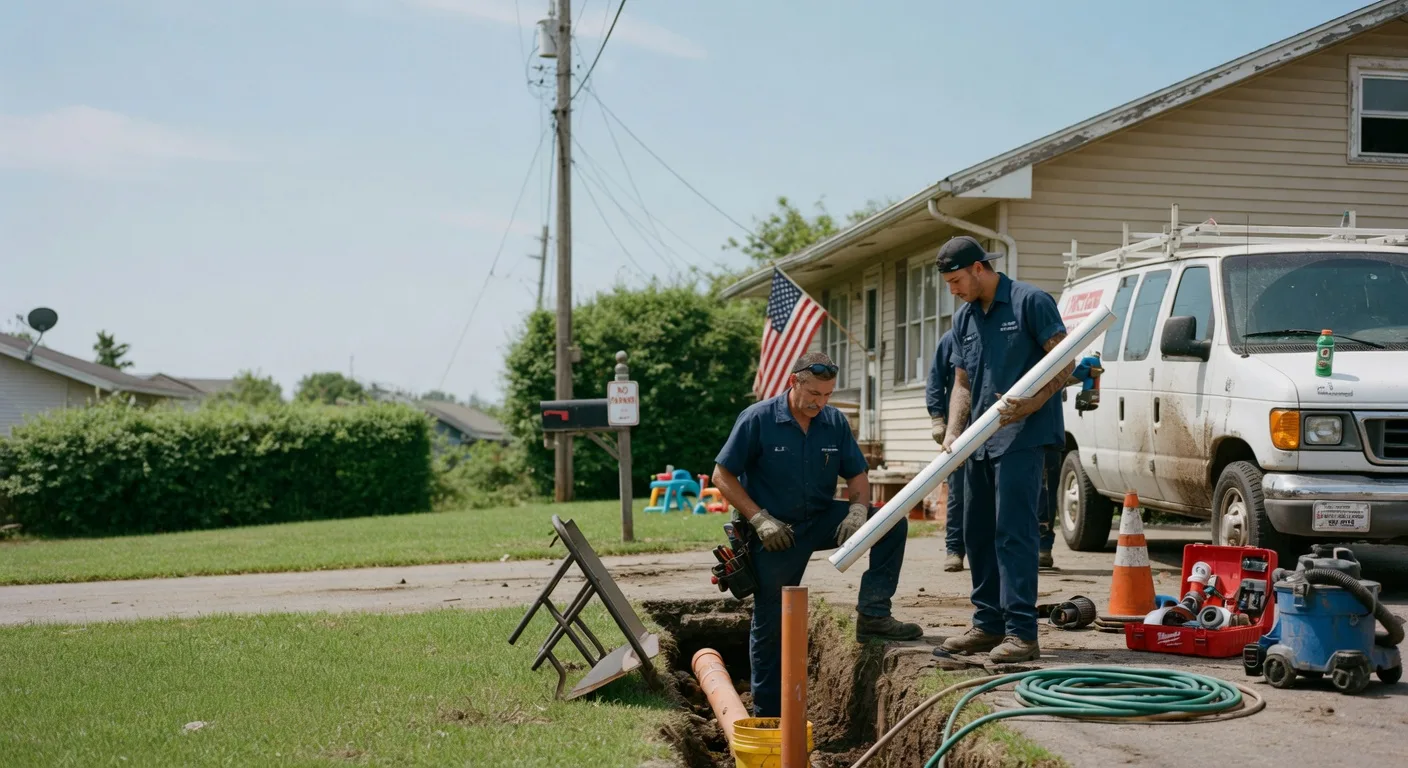
Expert Plumbers Co does not set or quote prices. It connects you with an independent local plumber, and that plumber names the number after seeing the actual problem. Several things drive the cost of a blocked drain. The first is where the clog sits. One slow sink with hair a few feet past the trap is a short cable job, while every drain in the house backing up points to the main line, which needs larger equipment and more time. The second is access. A clear, reachable cleanout keeps the work simple; if the plumber has to pull a toilet to reach the line, that adds labor. The third is the method. A cable machine punches a channel through a clog, hydro jetting scours the full pipe wall, and a camera inspection shows the pipe's condition so the plumber can tell whether cleaning is enough. The fourth is the pipe itself. Roots in clay joints, scale inside cast iron, or a bellied section holding water can turn a cleaning into a repair, and repairs bring in digging or lining, materials, and sometimes a permit. A plumber in Coloma, WI can narrow this down quickly once you say which fixtures are affected and how long it has been going on.
Before the plumber arrives, write down a few facts that shape the scope of work. Note which fixtures are affected, when the problem started, and whether anything unusual went down the drain beforehand, such as wipes, a large amount of grease, or a child's toy. Find the cleanout, which is usually a capped pipe in the basement, the crawlspace, or outside near the foundation, and clear a path to it. Tell the plumber about any past backups or earlier repairs on that line. Ask them to explain the method before starting, and to say what the next step would be if the first approach does not clear the line. If a camera is used, ask to see the footage so you understand what is wrong. Any work beyond cleaning should be described to you before it begins, including how much has to be opened up and whether a permit applies.
My shower drains slowly. What should I check before calling?
A shower that drains slowly is usually a single fixture problem, and that matters. Hair and soap scum catch in the strainer and the trap just below it. That is a different job from a main line problem, where every drain in the house runs slow.
Safe checks you can do yourself: lift the strainer or stopper and clear what is sitting on it. A plastic drain strip, the kind with small barbs, pulls hair out of the first few inches of pipe. Flush with hot tap water afterwards. Then test the others. Run the bathroom sink and flush the toilet while watching the tub. If water rises or bubbles in the tub, the problem is past this fixture.
Chemical drain openers are best avoided. They sit in a standing pipe, can damage fittings, and are a hazard to whoever opens the line next.
Stop running water and call if the toilet gurgles when the shower empties, if there is a sewage smell, or if water comes up in any drain. Gurgling can point to a blocked vent stack, and slow drains everywhere can point to the main line.
A cable machine is usually enough for hair and soap in a branch line. If it keeps coming back, a camera inspection shows why. Expert Plumbers Co is a referral service, not a plumbing company. We refer you to a local plumber for Drain Cleaning in Coloma, WI: (380) 262-9173.
One more thing to check is whether the problem is the shower drain itself or the pipe it sits in. If the strainer is clear and the water still pools, try removing the cover and looking at how the drain body is built. Some tubs have a pop-up stopper or a trip lever linked through the overflow, and a bent or hair-wrapped linkage can hold the plug partly shut. In older homes the tub may use a lead or cast iron trap further down that fills with soap and hair, while newer showers have a plastic P-trap that is easier to reach from below. A common mistake is pouring boiling water down the drain, which can soften plastic fittings and loosen joints. If the water level drops only after a long wait, even once the strainer is clean, the blockage is deeper in the branch and needs a plumber's tools.
When I run one side of my double kitchen sink, water comes up in the other side. Why?
When water from one basin rises in the other, both bowls are sharing a drain that is partly blocked downstream of where they join. The two basins feed a single tailpiece and trap, and the water has nowhere to go but back up the second bowl. The clog is almost never in the basin you are looking at.
The usual cause is grease and food residue that has built up on the pipe wall past the trap, narrowing the pipe until it can pass only a trickle. Sometimes the blockage sits in the horizontal pipe inside the wall, or further along where the kitchen line meets the main drain.
Safe checks you can do: run only the cold tap for a minute and see whether the water in the second bowl rises slowly or fast. Look under the sink for a leak at the trap and the connection between the two bowls. Remove the trap if you are comfortable doing so, with a bucket under it, and clear out what is inside. Skip chemical drain cleaner, since it sits in a standing pipe and can damage fittings and hurt whoever opens the trap next.
If the trap is clear and the water still climbs into the other bowl, the blockage is deeper. A cable machine is often enough for a soft grease and food plug. If the line clogs again within weeks, grease has likely coated the pipe wall, and hydro jetting scours it clean in a way a cable cannot. A camera inspection is worth asking about when the same line keeps returning, because it can show a bellied section holding water or a damaged joint that cleaning alone will not fix.
Stop running water and call promptly if the backup is also showing in other drains, if you smell sewage, or if water is coming up from a floor drain or toilet. That points to the main line rather than the kitchen branch, and every extra gallon you send down ends up on your floor.
Cost depends on access to the pipe, whether a cleanout is available, how far the blockage sits from the opening, and whether any section has to be opened up or replaced.
Expert Plumbers Co can connect you with an independent local plumber in Coloma, WI when you call (380) 262-9173.
Will baking soda and vinegar, or a kettle of boiling water, clear a slow drain?
You have a slow drain, so you tried baking soda and vinegar, or a kettle of boiling water. It still crawls, or the clog is back by morning. That is the usual result.
The fizz is mild. It can freshen a drain, but it does nothing to a solid clog of hair, soap scum, grease or paper. Boiling water melts grease for a moment, then the grease cools and sets again further down the pipe, where it is harder to reach. Boiling water can also soften PVC joints and crack porcelain. Hot tap water is safer than a kettle.
The real causes sit deeper: grease build-up on the pipe wall, scale in old cast iron, roots entering a clay joint on the main, or a bellied line that holds water and solids at its low point. A blocked vent stack can also make a drain sluggish and gurgling, which looks like a clog but is an air problem.
Count the affected drains. One slow fixture usually means a hair, soap or grease clog in that fixture or its branch. If the tub, sinks and toilets all run slow together, or you hear gurgling after a flush, the trouble is in the main line or vent, and no kitchen remedy will reach it.
Safe homeowner check: Remove the stopper or strainer and clear hair and residue by hand. Try a plunger with a good seal. Run hot tap water, not boiling. Check whether other fixtures are slow. Avoid stacking store-bought chemical cleaners, which can sit in a standing pipe.
Stop running water and call now if more than one fixture is backing up, if dark water is rising in a tub or floor drain, if you smell sewage, or if water comes up when you flush or drain the washer.
A cable machine is usually enough for a clog in a single branch. Hydro jetting is the better tool when grease or scale coats the pipe wall. A camera inspection is the right step when the drain clears and slows again within days, since that pattern points to a belly, roots or a damaged section.
Expert Plumbers Co is a referral service. We connect you with an independent local plumber in Coloma, WI. Call (380) 262-9173.
Tell the plumber what you already tried. Ask what they found in the line, not only that it was cleared. The scope depends on access to the pipe, whether a fixture has to be removed, the pipe material, and whether the cause is a simple clog or damage that needs repair.
Since we put in a water softener, the floor drain or laundry drain backs up when it regenerates. Are they related?
The softener finishes its cycle and a minute later the laundry drain gurgles or the floor drain spits up gray water. You did not have this before, so it is fair to wonder if the softener caused it. In most cases it did not cause the clog. It exposed one.
During regeneration, a softener flushes brine and rinse water out through a drain hose, usually into a standpipe, laundry tub or floor drain. That water arrives in bursts, and the volume is sudden. If the drain line is clear, it carries the surge without trouble. If the line has a partial clog, such as grease build-up on the pipe wall, a root mat at a clay joint or a belly holding water, the burst is more than it can pass, and the water rises in the lowest drain.
The discharge also needs to be set up properly. Most plumbing codes require an air gap, a physical space between the end of the softener drain hose and the drain, so wastewater cannot siphon back into the softener. A hose pushed deep into a standpipe, or taped tight to it, can cause splashing and backflow of its own. Rules vary by area, so the installer or local building department can say what applies in Coloma, WI.
The key question is how widespread it is. If only the standpipe backs up, the trouble may be the standpipe, its trap or the softener hose. If the floor drain, laundry drain and a basement toilet all react, the main drain is partly blocked, and the softener is just the first thing to push it over the edge.
Safe homeowner check: look at where the softener hose ends. Make sure it sits above the drain with a visible gap and is not kinked or pushed down inside the pipe.
Stop running water and call now if sewage is coming up through the floor drain, if water is spreading across the floor, or if you smell sewage.
A cable machine is often enough for a soft clog in a short branch. If roots, a belly or grease are suspected, the work calls for a camera inspection and hydro jetting.
Expert Plumbers Co is a referral service. We connect you with an independent local plumber in Coloma, WI. Call (380) 262-9173.
Tell the plumber the problem started after the softener went in and when in the cycle it shows up. Ask them to check the air gap and the standpipe as well as the main. Scope depends on access to the line, parts for any standpipe or hose changes, how much has to be opened up if a section is damaged, and any code requirement.